
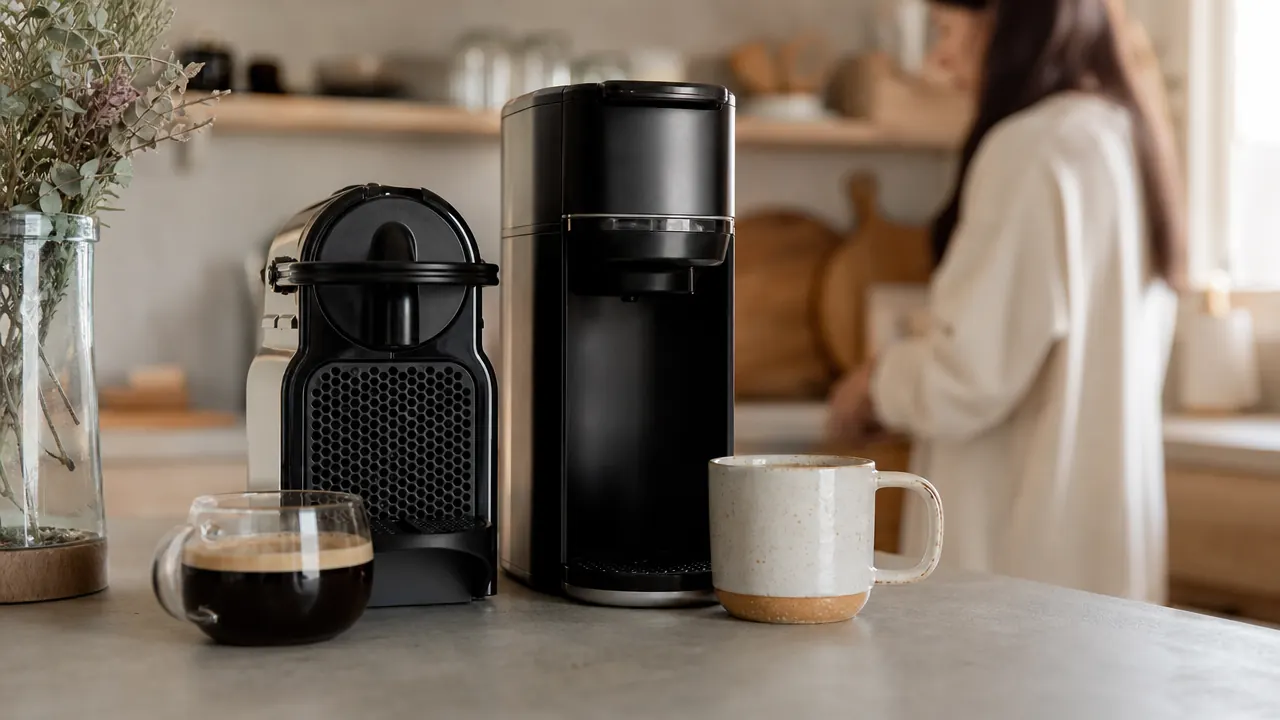
If your counter space is counted in inches, not feet, the choice between the Nespresso Essenza Mini and the Keurig K-Mini is one you will probably spend more time on than you expect. Both machines are legitimately small. Both make a single cup at a time. Both have enough of a following that you will find plenty of people online telling you they bought one and never looked back. The problem is that these two machines are not actually in the same category, even though they occupy the same shelf space at the store.
I ran both machines in the same kitchen for three weeks. Same capsules and equivalent K-Cups from the same roaster's brand. Same water. Same morning routine. The short answer: if you drink regular drip-style coffee, the Keurig K-Mini does what it says. If you drink espresso, lattes, or anything that starts with a concentrated shot, the Nespresso Essenza Mini is the only machine in this comparison that can actually make your drink. The longer answer is in the table and sections below.
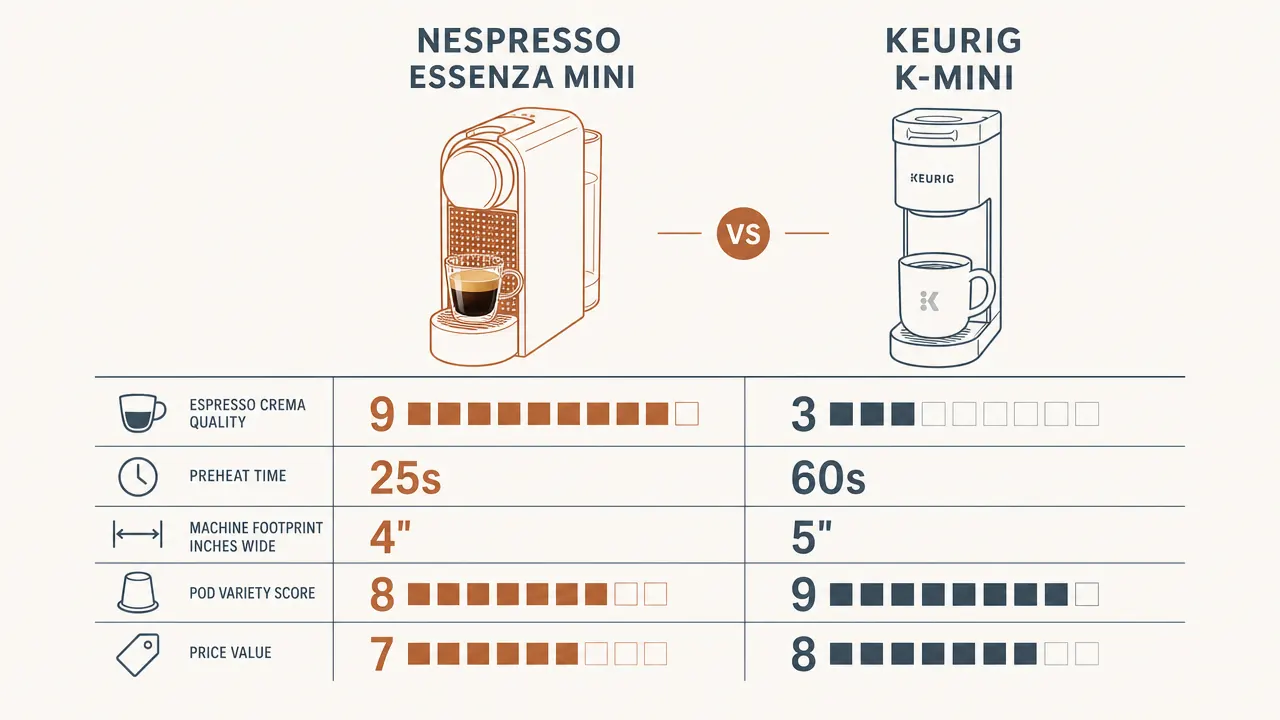
| Nespresso Essenza Mini | Keurig K-Mini | |
|---|---|---|
| Brew Type | Espresso (19-bar pump pressure) | Drip-style coffee (gravity, no pump pressure) |
| Footprint | 3.2 in wide x 8.0 in deep x 12.8 in tall | 4.5 in wide x 11.3 in deep x 12.1 in tall |
| Cup Volume Options | 40 ml (ristretto) or 110 ml (espresso) | 6, 8, 10, or 12 oz |
| Pod Compatibility | Nespresso Original Line capsules only | All standard K-Cup pods (thousands of options) |
| Brew Time | Approx. 30 seconds after heat-up | Approx. 2 minutes from cold start |
| Water Reservoir | 600 ml removable tank | 12 oz single-cup fill (no tank) |
| Crema Production | Consistent crema layer on every shot | None (no pressure extraction) |
| Noise Level | Audible mechanical buzz during 25-second extraction | Moderate hiss and gurgle |
| Current Price | Higher upfront investment | Lower upfront cost |
Where the Nespresso Essenza Mini Wins
The single biggest advantage the Essenza Mini holds over the Keurig K-Mini is the 19-bar pump. That number is not marketing copy. Espresso extraction requires pressure to push hot water through compacted, fine-ground coffee quickly. Drip brewers like the Keurig let gravity do the work, which is fine for a 10-ounce cup of light roast but produces nothing close to espresso. If you have ever pulled a shot on a proper cafe machine and then tasted a K-Cup on an espresso setting, you already know the gap is large. The Nespresso closes that gap in a machine that is literally 3.2 inches wide.
The footprint numbers above are worth studying. The Essenza Mini is narrower and shallower than the K-Mini, which matters when you are placing it between a toaster and a dish rack. On my test counter, a 24-inch stretch of usable space, the Essenza Mini left me 4 more inches of clearance. Over three weeks of daily use, that extra room was noticeable. The 600 ml removable water tank also means I refill it every five or six shots rather than every single cup like the K-Mini demands.
Speed is another area where the Essenza Mini shows its design focus. Once the machine finishes the initial 25-second heat-up cycle, subsequent shots pull in about 30 seconds total. The K-Mini takes closer to two minutes from cold because it has to heat enough water for an 8 or 10-ounce cup rather than a 40 or 110 ml shot. On a workday morning, 90 seconds is a real difference when you are already timing yourself against the door.
Where the Keurig K-Mini Wins
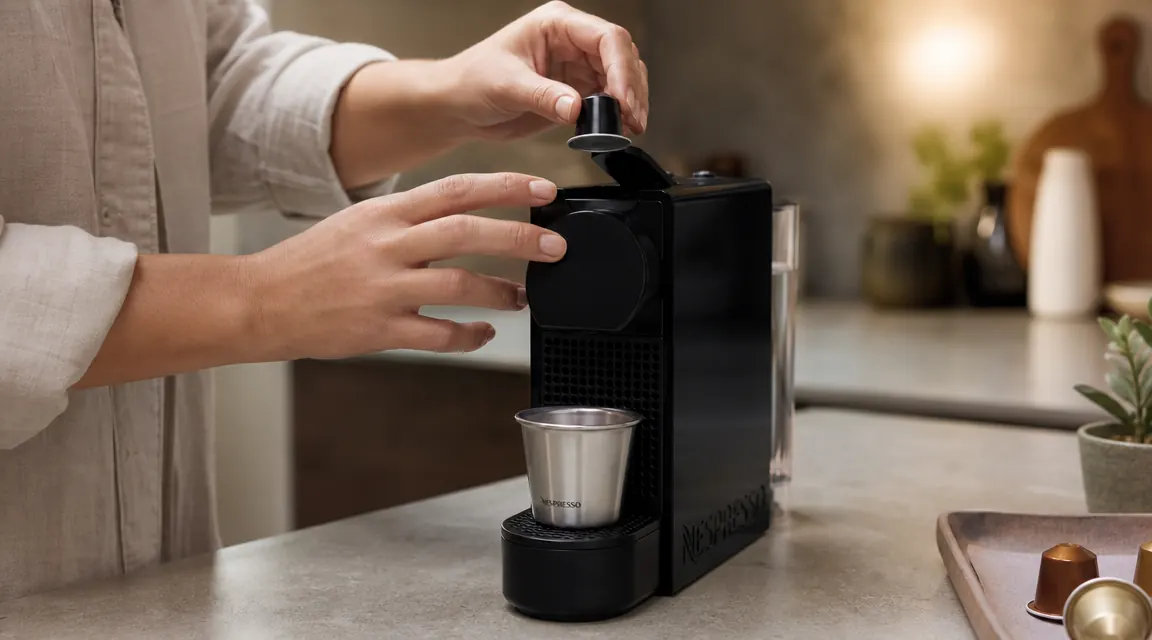
The K-Mini has one clear structural advantage: it works with any K-Cup pod made by any brand. That is thousands of options across every roast style, caffeine level, flavored variety, tea, hot cocoa, and cider. If you are a household with two people who drink completely different things in the morning, or if you like picking up whatever is on sale at the grocery store, the K-Mini's open pod ecosystem is genuinely useful. The Essenza Mini locks you into Nespresso Original Line capsules, which are widely available but not at every corner store.
The K-Mini is also quieter in a way that matters in small spaces. The Nespresso is not loud in absolute terms, but the pressurized extraction produces a high-pitched mechanical buzz for the duration of the shot. In a studio apartment with thin walls, or if you are trying not to wake someone sleeping 10 feet away, that buzz is noticeable every single morning. The K-Mini hisses and gurgles, but at a lower pitch and a less consistent tone. It is a small point, but it comes up repeatedly in both machines' owner reviews.
Cost is the other K-Mini win worth naming plainly. The K-Mini typically comes in at a noticeably lower upfront price. If you are outfitting a first apartment on a tight budget and you just need a machine that makes a passable cup of coffee before you get out the door, the K-Mini does that job for less money. The per-pod cost is comparable over time, so the upfront price gap does not disappear quickly, and for a strict budget buyer the lower starting price is a real factor.
Want espresso in a 3.2-inch-wide machine? Check today's price on the Essenza Mini.
The Nespresso Essenza Mini by De'Longhi is the narrowest machine that produces real espresso pressure. If your morning starts with a shot or a latte, this is the only compact machine in this comparison that can actually deliver it.
Amazon Check Today's Price on Amazon →The Keurig K-Mini makes drip coffee. The Nespresso Essenza Mini makes espresso. Those are two different drinks. Know which one you actually want before you buy either machine.
The Drink Type Question Is the Only Question That Matters
I want to be direct about something that gets lost in most comparisons of these two machines. People frame this as a question of which is better. It is not. It is a question of what you drink. If you drink black coffee, Americano-style diluted espresso, or anything you make in a 10-ounce mug, the Keurig K-Mini can serve you well and costs less to start. If you drink espresso shots, cappuccinos, cortados, or lattes, the Keurig K-Mini cannot make those drinks regardless of what the pod packaging claims. It has no pump pressure. Hot water passing through a K-Cup under gravity does not produce espresso.
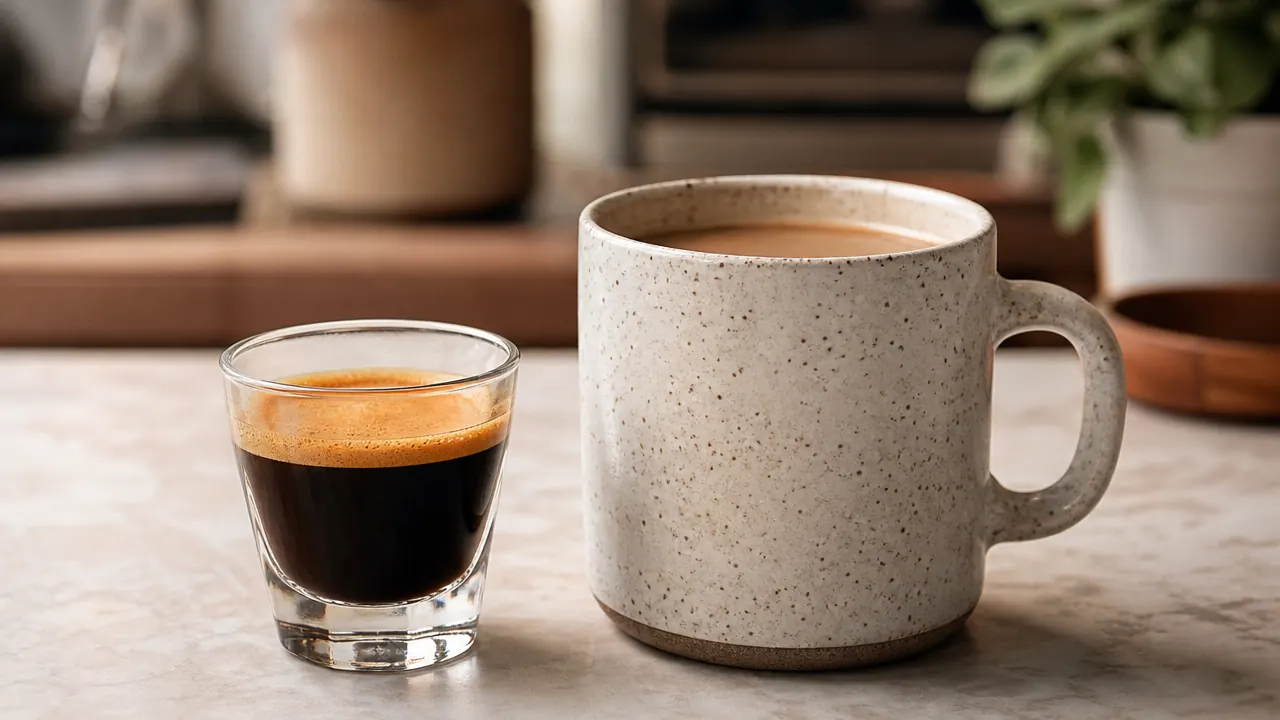
I tested a K-Cup labeled espresso roast on the K-Mini's strongest setting. The result was dark, slightly bitter drip coffee. Strong, but not espresso. I then pulled a Nespresso Ristretto pod on the Essenza Mini. The crema was visible within the first few seconds of extraction. The body was syrupy and concentrated. The two liquids were not similar. If you have ever had an actual espresso at a cafe and liked it, only one of these machines produces anything close to that experience in a home kitchen.
Pod Availability and Ongoing Cost
Nespresso Original Line capsules are sold at Target, Williams-Sonoma, and directly from Nespresso's website. They are not available at every grocery store. In a smaller town or rural area, you may need to order them online or set up a subscription. Nespresso's subscription service ships on a fixed schedule, which solves the availability problem for most people, but it is a step the K-Mini user never has to take. For convenience shoppers who prefer to grab pods at the grocery store on the way home, the K-Mini's compatibility with mainstream K-Cups is a practical advantage.
Per-pod pricing for Nespresso Original Line capsules typically runs in the mid-to-high range per capsule depending on the variety and source. K-Cups from major brands average in the lower-to-mid range each. Over a year of one drink per day, you are looking at a meaningful cost difference depending on your pods. That narrows the initial price gap on the Essenza Mini somewhat. If you were going to a coffee shop every morning for a latte, both machines save you real money. The Nespresso still saves you more per drink compared to a cafe order.
Build Quality and Longevity
The Essenza Mini has a noticeably more substantial feel in hand. The exterior is a hard plastic shell with a matte finish that does not attract fingerprints. The lever mechanism for opening the pod compartment operates with a solid click. Nothing feels loose. De'Longhi manufactures under the Nespresso brand license and has been building espresso machines for decades. That manufacturing background shows up in the tolerances and the way the machine holds its form after repeated use.
The K-Mini is lighter and feels more economical in construction. The plastic has a glossy finish that shows fingerprints and light scratches. The lid hinge and K-Cup holder work fine but do not feel as precise as the Nespresso's lever. For a machine at its price point, the K-Mini's build quality is appropriate. Over a one-to-two-year horizon, most owners report both machines continue to work reliably. Descaling on schedule is the single biggest maintenance factor for either machine's lifespan, and the Essenza Mini's automatic descale indicator makes it easier to stay on track.
Cleaning and Maintenance
Both machines are easy to clean at the basic level. The Essenza Mini has a used-capsule container that holds about 9 capsules before you need to empty it, and the water tank slides out for rinsing under the tap. Nespresso recommends descaling every 300 brews or whenever the descale light activates, roughly every 3 to 6 months for daily users. The process takes about 20 minutes and requires a descaling kit. The K-Mini has no permanent water tank to maintain, but it does require periodic descaling on a schedule you track yourself. Neither machine is difficult to keep clean, but the Essenza Mini's built-in descale indicator removes the guesswork.
Who Should Buy Which
Buy the Nespresso Essenza Mini if you drink espresso, cappuccinos, or lattes, if counter space is genuinely constrained and every centimeter counts, or if you want a machine that heats up quickly and makes your drink in under a minute. The pod ecosystem is narrower, the upfront cost is higher, and the machine buzzes for 30 seconds during extraction, but none of those things matter if you need real espresso pressure and have been settling for drip coffee because you thought a proper espresso machine required too much space. The Essenza Mini solves that problem in 3.2 inches of counter width. For a deep look at long-term performance, see our full 90-day review of the Nespresso Essenza Mini.
Buy the Keurig K-Mini if you drink regular coffee and want the most flexibility in pod selection, if you are on a strict budget and need to keep the upfront cost low, or if multiple people in your household drink different things and you want one machine that can handle all of them without locking anyone into a single capsule system. The K-Mini is a capable, compact drip brewer for its price. It just cannot make espresso, and no setting or specialty pod will change that fundamental limitation.
For most people choosing between these two machines in a small kitchen, the Nespresso Essenza Mini is the stronger long-term pick. Espresso is a more versatile base than drip coffee. You can add water to approximate an Americano, add steamed milk for a latte, or drink it straight. The K-Mini cannot move in that direction. The narrower footprint also means the Essenza Mini fits in spaces the K-Mini does not. If you want to go further on getting the most out of it, the guide on how to get cafe-quality espresso in a small kitchen covers pod selection, cup prep, and temperature details that make a real difference.
The Essenza Mini fits where other espresso machines do not. See today's price before it changes.
At 3.2 inches wide, the Nespresso Essenza Mini is the only machine in this comparison that produces real espresso pressure in a genuinely compact footprint. If the testing above pointed you toward real espresso, this is where to check current pricing and availability.
Amazon Check Today's Price on Amazon →